
AI Chatbots vs Human Support: Finding the Right Balance for Businesses
Introduction
Customer support has evolved dramatically over the past decade. Businesses no longer rely solely on human representatives to answer customer queries. Artificial Intelligence (AI) has introduced intelligent chatbots capable of handling thousands of conversations simultaneously, offering instant responses and reducing operational costs.
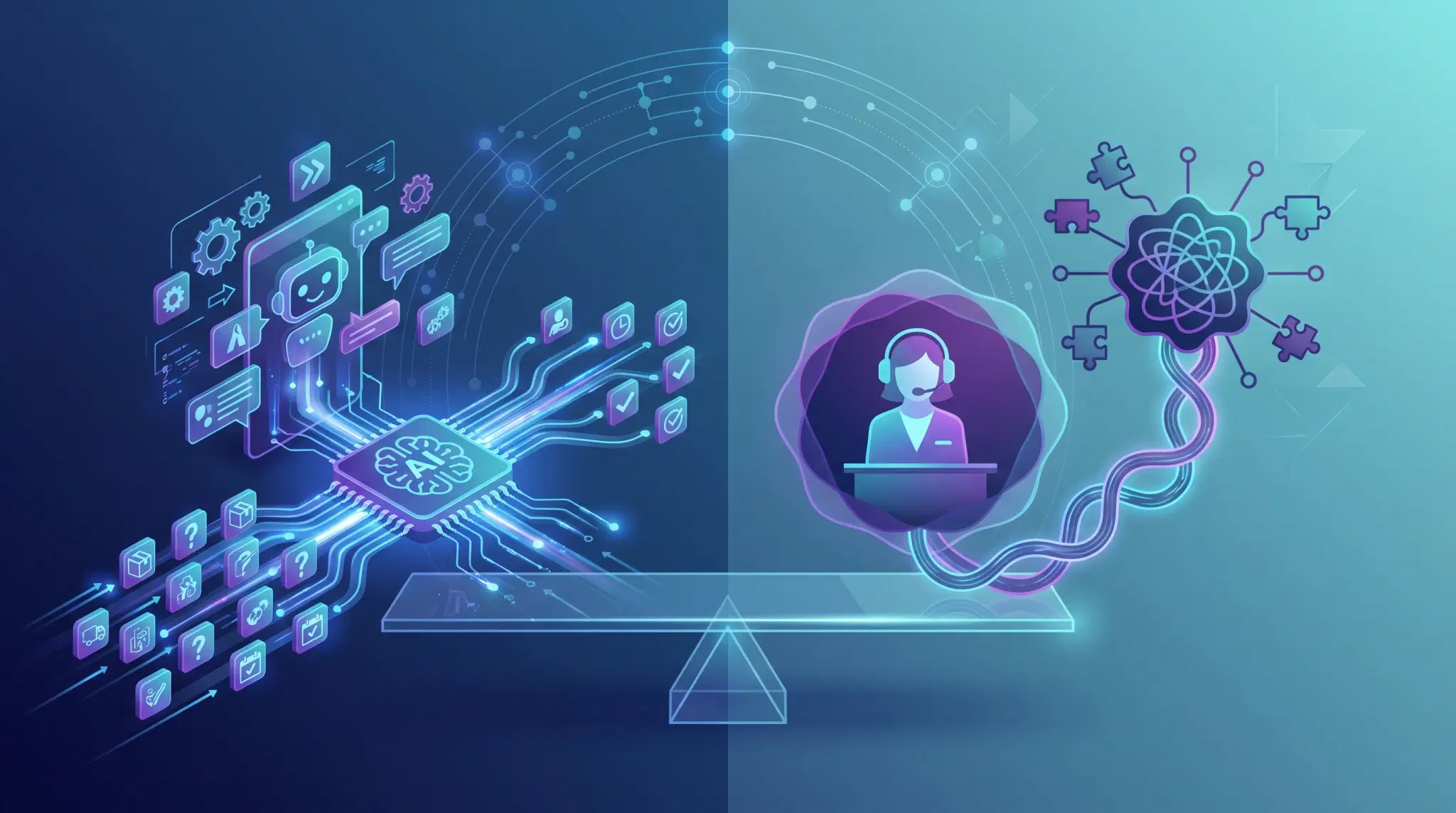
The most successful organizations combine AI chatbots and human customer support to create a seamless customer experience. This hybrid approach increases efficiency while maintaining the empathy and trust only humans can provide.
Why Customer Support Matters More Than Ever
Customer support is no longer just a service department—it has become a major factor influencing purchasing decisions.
Modern customers expect:
Instant responses
24/7 availability
Personalized experiences
Quick problem resolution
Consistent communication
Meeting these expectations manually becomes increasingly difficult as businesses grow. That's where AI customer support solutions come into play.
What Are AI Chatbots?
AI chatbots are software applications powered by Artificial Intelligence, Machine Learning, and Natural Language Processing (NLP). They understand customer questions and provide automated responses without human intervention.
Unlike traditional bots that follow predefined scripts, AI-powered chatbots can:
Understand context
Learn from previous conversations
Personalize responses
Recommend products
Resolve common customer issues
Businesses use AI chatbots on:
Websites
Mobile applications
WhatsApp
Facebook Messenger
Instagram
Customer portals
E-commerce stores
Benefits of AI Chatbots for Businesses
1. 24/7 Customer Support
Customers don't only browse during business hours.
AI chatbots provide assistance:
Day
Night
Holidays
Weekends
This significantly improves customer satisfaction.
2. Instant Responses
Waiting on hold frustrates customers.
AI chatbots answer within seconds, improving:
Customer experience
Engagement
Conversion rates
3. Lower Operational Costs
Hiring, training, and managing large customer support teams can be expensive.
AI chatbots reduce costs by automating repetitive tasks like:
FAQs
Order tracking
Appointment booking
Password resets
Product information
4. Scalability
During peak seasons like Black Friday or holiday sales, customer inquiries can multiply.
Human teams may struggle, but AI chatbots can handle thousands of conversations simultaneously.
6. Lead Generation
Modern AI chatbots can:
Collect customer details
Qualify leads
Schedule meetings
Recommend products
Guide users through sales funnels
This makes them valuable tools for marketing and sales teams.
Limitations of AI Chatbots
Despite their advantages, AI chatbots have several limitations.
Limited Emotional Intelligence
AI cannot genuinely understand emotions.
Customers experiencing frustration often need empathy rather than automation.
Difficulty Handling Complex Issues
AI performs well with repetitive questions but struggles with:
Unique customer situations
Billing disputes
Technical troubleshooting
Sensitive complaints
Why Human Support Still Matters
1. Emotional Intelligence
Humans understand:
Frustration
Confusion
Anger
Excitement
2. Critical Thinking
Complex issues require:
Analysis
Judgment
Decision-making
Creativity
Human representatives excel where AI reaches its limits.
3. Relationship Building
Long-term customer loyalty depends on trust.
Friendly conversations create stronger customer relationships than automated replies.
Why Businesses Should Choose a Hybrid Support Model
AI Handles:
Frequently Asked Questions
Order status
Booking appointments
Lead qualification
Product recommendations
Basic troubleshooting
Humans Handle:
Escalated issues
Refund requests
Technical support
Customer complaints
Relationship management
High-value clients
Future Trends in Customer Support
The future of customer service will increasingly blend AI with human expertise. Emerging trends include:
Generative AI-powered virtual assistants
Voice-enabled AI support
Predictive customer service
AI sentiment analysis
Hyper-personalized customer experiences
Omnichannel support integration
AI-assisted live agents
Multilingual conversational AI
Businesses adopting these innovations will improve efficiency while delivering exceptional customer experiences.
How AI and Human Support Drive Business Growth
When implemented strategically, a hybrid support model can:
Reduce operational costs
Increase customer satisfaction
Improve response times
Generate more qualified leads
Enhance customer retention
Strengthen brand loyalty
Boost sales conversions
Improve employee productivity
Rather than replacing people, AI empowers support teams by automating routine tasks and allowing agents to focus on high-value interactions.
Conclusion
The debate between AI Chatbots vs Human Support isn't about choosing one over the other. It's about leveraging the strengths of both to create a superior customer experience.
AI chatbots excel at providing instant, scalable, and cost-effective support for routine inquiries, while human agents bring empathy, critical thinking, and personalized assistance to complex situations. By embracing a hybrid support model, businesses can meet modern customer expectations, improve operational efficiency, and foster long-term loyalty.
As AI technology continues to evolve, the companies that successfully balance automation with genuine human interaction will be best positioned to thrive in an increasingly competitive market.